
Natural birth

Stages of Vaginal Birth
Every labor and delivery experience is unique, and no one can predict exactly how your childbirth journey will unfold. For some women, labor lasts only a few hours, while for others it may take considerably longer. Understanding the stages of labor can help you feel more confident and prepared.
A physiological (vaginal) birth consists of three stages:
- The first stage includes the latent (early) phase and active labor.
- The second stage begins with the urge to push and ends with the birth of your baby.
- The third stage involves the delivery of the placenta and fetal membranes.
Early Labor (Latent Phase)
During the latent phase, the cervix begins to soften, thin (efface), and gradually dilate. You may experience irregular, mild contractions that slowly become more noticeable.
As the cervix changes, you may notice a pink, mucus-like discharge known as the mucus plug, which is a normal sign that labor is progressing.
Early labor may last from several hours to several days, although it is often shorter in subsequent pregnancies.
During this stage, it is recommended to remain calm, rest as much as possible, stay hydrated, and wait until contractions become regular before coming to the hospital.
Seek medical attention immediately if:
- Your water breaks (rupture of membranes)
- You experience heavy vaginal bleeding
- You notice any concerning symptoms or are advised to do so by your healthcare provider
Active Labor
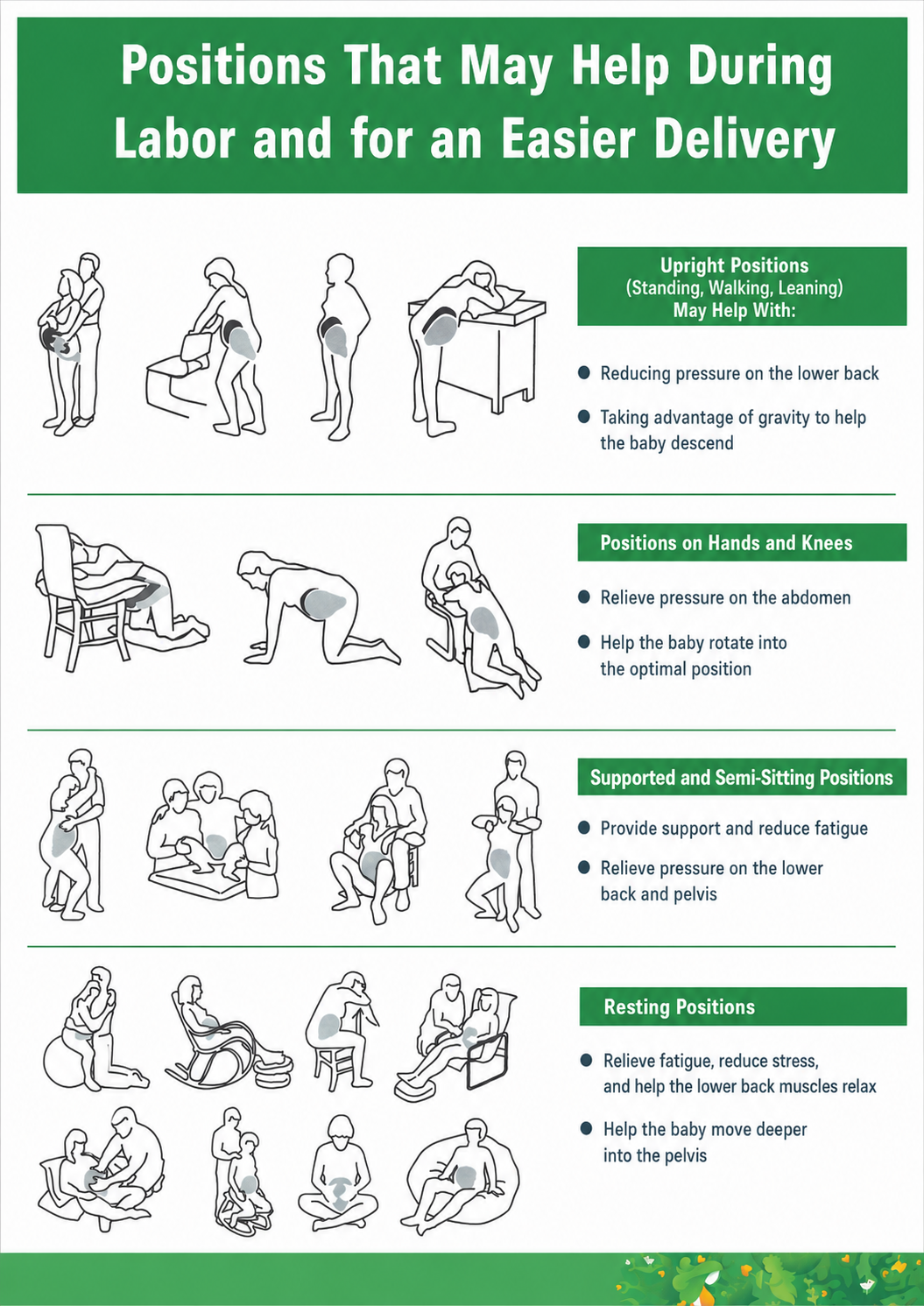
During active labor, the cervix dilates from approximately 6 cm to 10 cm. Contractions become stronger, longer, more frequent, and occur at regular intervals.
You may also experience:
- Nausea or vomiting
- Muscle cramps or shaking
- Rupture of the amniotic sac (your water breaking)
At this stage, you should already be at the hospital.
If desired and medically appropriate, pain relief options, including epidural anesthesia, can be discussed with your healthcare team. The decision to receive pain relief is entirely yours.
Active labor lasts an average of approximately eight hours, although the duration varies from woman to woman.
Staying Comfortable During Active Labor
You are encouraged to remain mobile and choose the positions that feel most comfortable. Walking, changing positions, or using a birthing ball may help improve comfort during labor.
Breathing techniques can also help manage contractions. Slow, deep breathing—inhaling through the nose and exhaling through the mouth—may reduce discomfort. Gentle lower back massage between contractions may also provide relief.
Transition Phase
The final part of active labor is known as the transition phase, which is often the most intense stage of labor.
Contractions become very strong, lasting 60–90 seconds, and occur close together. You may feel increasing pressure in the pelvis and rectum along with a strong urge to push.
If the cervix is not yet fully dilated, your healthcare provider will ask you to avoid pushing, as doing so too early may cause cervical injury.
The transition phase usually lasts 15 minutes to one hour.
Second Stage – Birth of Your Baby
The second stage begins once the cervix is fully dilated and ends with the birth of your baby.
During this stage, you will actively push with the guidance of your healthcare team. Your doctor or midwife will advise you when to push or may encourage you to follow your body's natural urge.
Proper pushing techniques help reduce unnecessary strain and protect the pelvic floor.
At certain moments, you may be asked to pause pushing briefly to allow the perineal tissues to stretch gradually, reducing the likelihood of tearing.
After the baby's head is delivered, the rest of the body usually follows within a few moments. If necessary, the newborn's airway will be gently cleared immediately after birth.
Third Stage – Delivery of the Placenta
Following the birth of your baby, attention turns to delivering the placenta and fetal membranes.
Medication may be administered to encourage uterine contractions and reduce postpartum bleeding. Gentle controlled traction on the umbilical cord is then used to assist with placental delivery.
Your physician will carefully examine the placenta and membranes to ensure they have been completely delivered.
If any tears or lacerations are present, they will be repaired. If you have not received epidural anesthesia, local anesthesia will be administered before suturing if required.
After Delivery
Following childbirth, you and your baby will remain in the delivery suite for approximately two hours, during which your healthcare team will closely monitor your recovery, including uterine contraction and postpartum bleeding.
After this observation period, you and your newborn will be transferred together to the postnatal ward, where you will typically stay for 48 hours while receiving comprehensive care and support.