
Advices before pregnancy
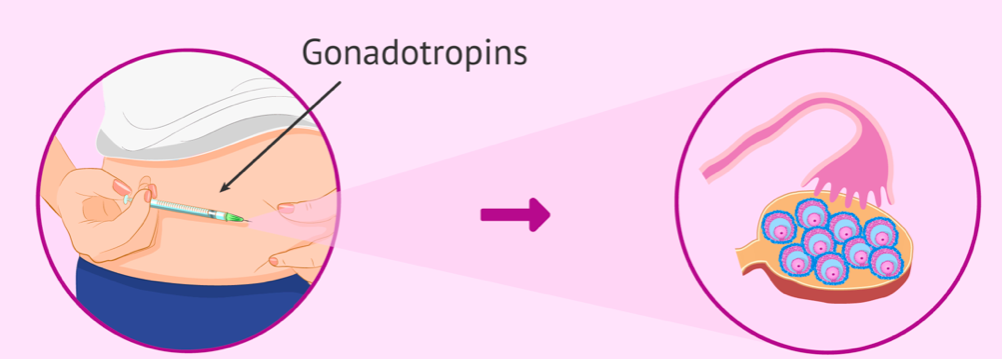
How Is Ovarian Stimulation Performed During IVF?
- During IVF treatment, the ovaries are stimulated using a combination of oral and injectable medications. Ovarian stimulation typically lasts 8–14 days.
- The ovaries' response to stimulation is closely monitored through ultrasound examinations and hormonal assessments.
- When the developing follicles reach a diameter of 18–20 mm, a final injection, known as the trigger shot, is administered to complete the final maturation of the eggs.
- Approximately 34–36 hours after the trigger injection, the follicular fluid is collected in order to retrieve the eggs.
- Each patient receives an individualized dose of hormonal medications for 8–12 days, depending on their treatment protocol and ovarian response.
- It is extremely important that the trigger injection is administered at the exact time prescribed by your fertility specialist. If it is given incorrectly or at the wrong time, there is a significant risk that no eggs will be retrieved during the egg collection procedure.
How Is Egg Retrieval Performed and What Should I Expect?
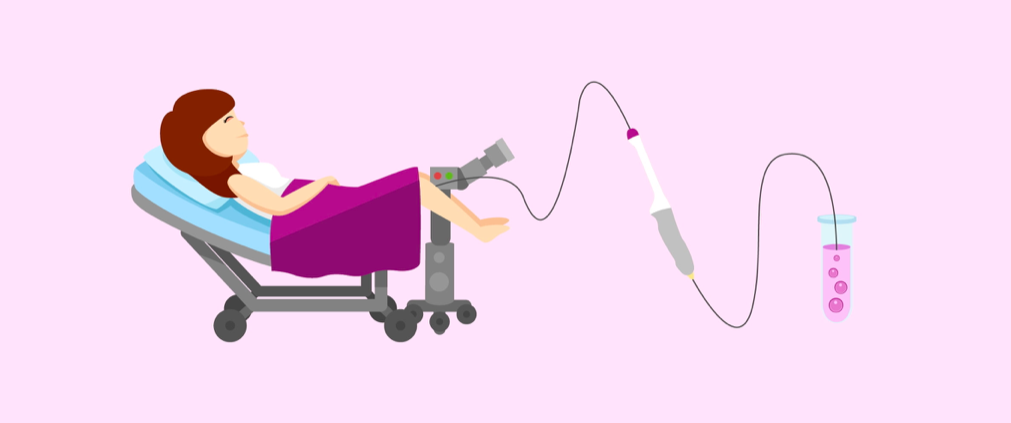
- ransvaginal oocyte retrieval (TVP) is a 10–15-minute procedure performed to collect follicles in order to retrieve the female reproductive cells (eggs).
- On the evening before the procedure, you should stop eating after 8:00 PM. You may drink clear fluids until 12:00 AM (midnight). A cleansing enema is not required before the procedure.
- On the day of the procedure, you should arrive at the clinic fasting (do not eat, drink water, or chew gum).
- Upon arrival, a nurse will provide you with disposable clothing and insert an intravenous (IV) catheter for anesthesia. You will then be positioned on the gynecological operating table, where the vaginal area will be prepared for the procedure.
- Under complete pain relief and intravenous sedation, the eggs are aspirated transvaginally under ultrasound guidance. During the 10–15-minute procedure, follicular fluid is collected from both ovaries.
- The aspirated follicular fluid is immediately transferred to the embryologist, who examines it under a microscope to identify the eggs and prepare them for further laboratory processing.
- After the procedure, you will remain at the clinic for approximately 1.5–2 hours under medical observation. In most cases, you will be able to return home around midday.
- It is recommended that you rest at home during the period between egg retrieval and embryo transfer. Mild discomfort is common for several days after the procedure; however, strict bed rest is not necessary.
- On the same day as the ovarian puncture, your partner will provide a semen sample after 2 days of sexual stinence, and the retrieved eggs will be fertilized.
-
Approximately 34–36 hours after the trigger injection, the eggs are retrieved through this minor surgical procedure performed under ultrasound guidance.
-
The processed sperm and eggs are then either placed together in the same culture dish for conventional fertilization, or a single selected sperm is injected directly into a mature egg using Intracytoplasmic Sperm Injection (ICSI). - Fertilization and embryo culture are closely monitored in the IVF laboratory and continue for up to 5–6 days.
What Happens After Transvaginal Oocyte Retrieval (TVP) and What Should I Expect?

Following transvaginal oocyte retrieval (TVP), the embryos are carefully monitored in the laboratory for 2–5 days. During this period, embryologists closely assess embryo development to select the highest-quality embryo(s) for transfer into the uterus. If conditions are not suitable for embryo transfer, all viable embryos are cryopreserved (frozen). Cryopreservation allows the embryos to be safely stored until they are ready to be used in a future treatment cycle.
How Should I Prepare for Embryo Transfer and What Should I Expect?
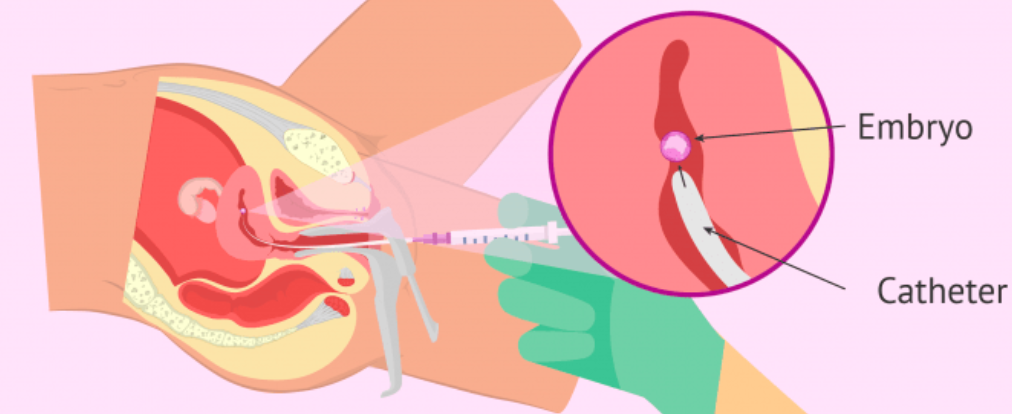
Embryo transfer is the procedure in which one or more embryos are placed into the uterine cavity. The procedure is completely painless and does not require anesthesia.
On the day of the embryo transfer, you should arrive at the clinic after a light breakfast and continue taking all prescribed medications, including vaginal capsules, as instructed by your doctor.
During the procedure, the selected embryo(s) are loaded into a thin, soft catheter and gently transferred through the cervix into the uterine cavity under ultrasound guidance.
A moderately full bladder is essential for embryo transfer, as it improves ultrasound visualization and facilitates accurate placement of the embryo(s) within the uterus.
After the procedure, you will remain at the clinic for 20–30 minutes in a resting position before being discharged home with your prescribed medications and post-transfer instructions.
Following embryo transfer, you may resume your normal daily activities. Bed rest is generally not recommended, as it may negatively affect pregnancy outcomes by reducing blood circulation and increasing emotional stress.
The prescribed hormonal therapy should be continued for 12–14 days until a blood pregnancy test (serum hCG) is performed to determine the outcome of the treatment.
If pregnancy is confirmed, hormonal therapy is usually continued for 6–8 weeks, with the dosage gradually reduced according to your physician's recommendations.
In most cases, 1–2 carefully selected embryos, and no more than 3 embryos, are transferred into the uterus 2–5 days after egg retrieval.
Following embryo transfer, prescribed medications should be continued for 12–14 days, until the blood hCG test is performed to confirm whether pregnancy has been achieved.


